Shanghai Huashan Hospital Team Explores Endoscopic Cryoablation, Offering New Perspectives on Bladder- and Kidney-Sparing Treatment for Urological Cancers
From local tumor control in bladder cancer to organ-preserving strategies for high-risk patients, a Shanghai medical research team is exploring new approaches to the treatment of urological cancers through innovative technology and combination therapies.
For patients with bladder cancer and upper tract urothelial carcinoma (UTUC), achieving effective tumor control while preserving bladder and kidney function remains an important clinical challenge.
In recent years, Professor Haowen Jiang and his team at Huashan Hospital, Fudan University, have conducted a series of studies on endoscopic cryoablation (ECA). Through the development of a novel cryoablation system and the integration of this technology with surgery, immunotherapy, and chemotherapy, the team has made notable progress in exploring local tumor control and organ-preserving treatment strategies for urological cancers.
Their research has been published in international medical journals, including Cancer and European Urology Oncology, providing new clinical evidence to support the investigation of bladder- and kidney-sparing approaches for selected patients.
Innovative Endoscopic Cryoablation: Improving Local Tumor Control
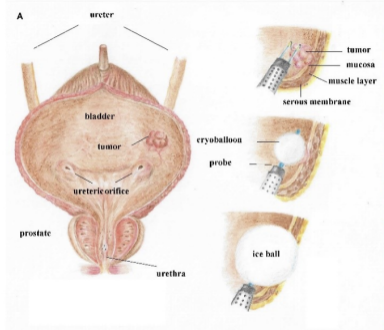
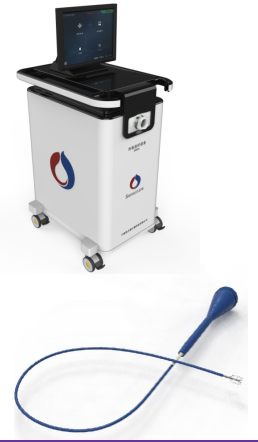
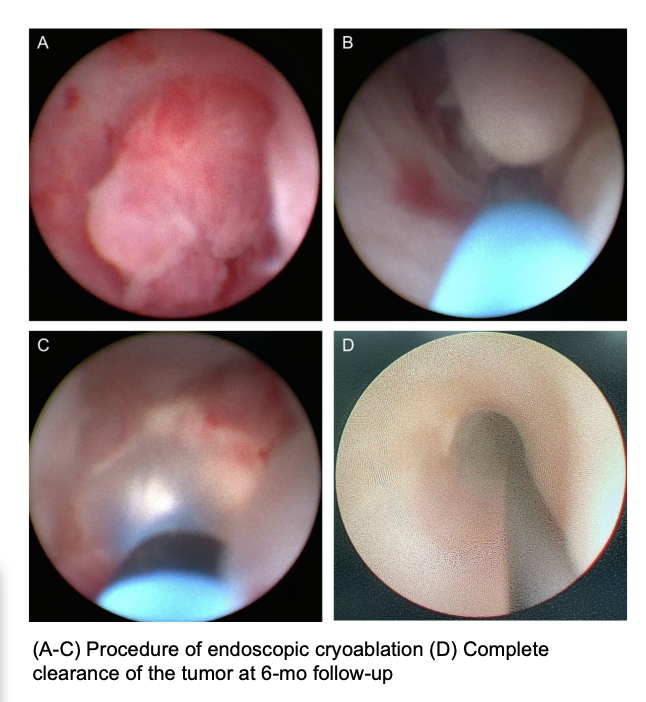
Endoscopic cryoablation is a local treatment technique that uses extremely low temperatures to destroy tumor tissue. The system developed by Professor Jiang’s team consists of a cryogen-generating unit and a specially designed balloon cryoprobe, which enables targeted cryotherapy through an endoscopic approach.
For patients with non-muscle-invasive bladder cancer (NMIBC), transurethral resection of bladder tumor (TURBT) is a standard treatment approach. However, residual tumor cells and the risk of recurrence following surgery remain important clinical concerns. Endoscopic cryoablation can be used as an adjunctive treatment to address potentially residual tumor tissue.
In 2022, a multicenter, randomized, controlled Phase II clinical trial involving 205 patients with bladder cancer was published in the international oncology journal Cancer.
The study found that the local control rate was 91.5% in patients treated with TURBT combined with endoscopic cryoablation, compared with 76.5% in the control group. The difference was statistically significant.
Furthermore, exploratory long-term follow-up analyses indicated more favorable recurrence-free survival (RFS) and progression-free survival (PFS) outcomes in the group receiving combination treatment with cryoablation.
These findings suggest that endoscopic cryoablation may serve as an adjunctive treatment option for selected patients with NMIBC, with the potential to improve local tumor control.
Exploring Bladder-Sparing Treatment for High-Risk Bladder Cancer
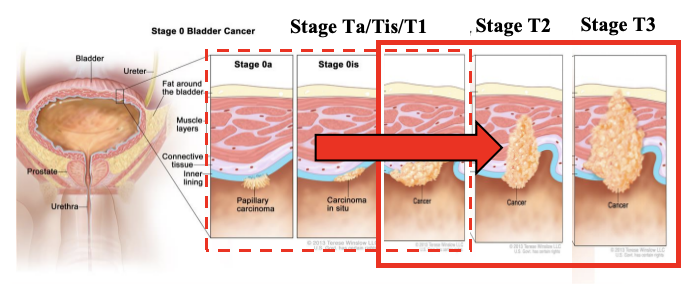
For some patients with high-risk or muscle-invasive bladder cancer, radical cystectomy remains an important standard treatment option. However, bladder removal and subsequent urinary diversion can have a lasting impact on patients’ quality of life.
To explore the possibility of preserving bladder function while maintaining effective tumor control, Professor Jiang’s team has further developed a treatment strategy known as TECIC.
This bladder-sparing approach combines transurethral resection of bladder tumor, endoscopic cryoablation, immune checkpoint inhibitors, and chemotherapy. By integrating local and systemic treatments, the strategy aims to explore organ-preserving options for patients with high-risk bladder cancer.
According to the research data provided by the team, a clinical study comparing the TECIC strategy with radical cystectomy reported the following outcomes:
The 24-month overall survival (OS) rate was 100% in the TECIC group, compared with 72.9% in the control group.
The 24-month progression-free survival (PFS) rate was 93.1% in the TECIC group, compared with 67.1% in the control group.
These figures were reported in the full analysis set (FAS) and represent encouraging preliminary findings warranting further investigation.
However, this bladder-sparing strategy requires validation through larger clinical studies and longer-term follow-up. It should not currently be considered a replacement for standard treatment in all patients for whom radical cystectomy is indicated.
From Bladder Preservation to Kidney Preservation: Expanding Treatment Options for Upper Tract Urothelial Carcinoma
The research applications of endoscopic cryoablation extend beyond bladder cancer.
Upper tract urothelial carcinoma (UTUC), which develops in the renal pelvis or ureter, is commonly treated with radical nephroureterectomy (RNU) in high-risk cases. However, removal of the affected kidney can have a significant impact on long-term renal function.
In 2024, a study published in European Urology Oncology compared endoscopic cryoablation with radical nephroureterectomy in patients with high-risk UTUC.
The study reported comparable two-year overall survival and progression-free survival outcomes between the two groups, while demonstrating an advantage for cryoablation in terms of renal function preservation.
The renal preservation rate in the cryoablation group reached 91.7%. In addition, the estimated glomerular filtration rate (eGFR) changed by +12.2% in the cryoablation group, compared with -11.2% in the radical surgery group.
These findings suggest that, for carefully selected patients, endoscopic cryoablation may offer an approach to tumor treatment that also helps preserve kidney function.
Building on this research, the team has also explored a kidney-sparing treatment strategy known as LECIC, which combines laser ablation, cryoablation, immunotherapy, and chemotherapy.
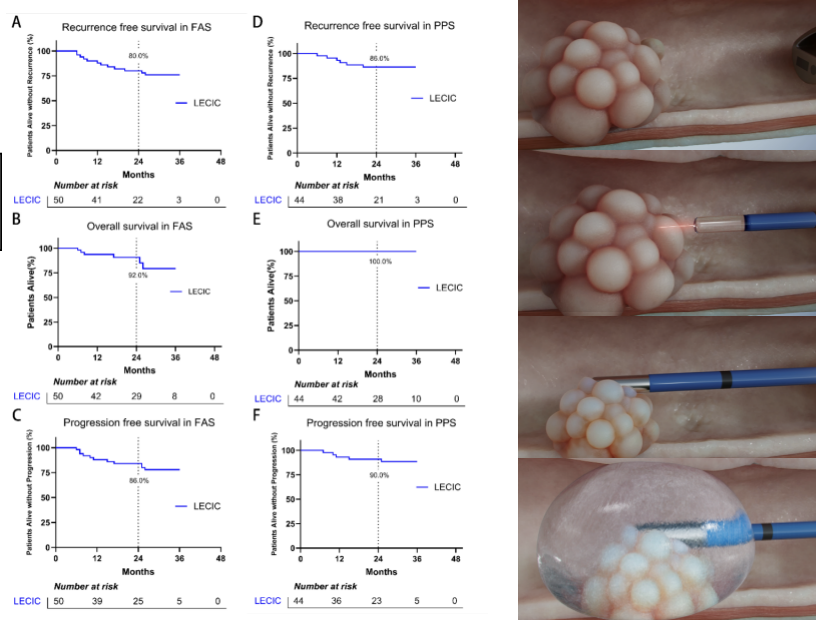
According to the Phase II clinical research data provided, the LECIC strategy achieved a 24-month overall survival rate of 92%, a progression-free survival rate of 86%, and a recurrence-free survival rate of 80% in the full analysis set.
In the per-protocol set, the corresponding rates were 100%, 90%, and 86%, respectively.
These preliminary findings indicate potential clinical value for further investigation. However, given the limitations of the current study design and sample size, additional research is needed to establish its long-term outcomes and identify the patients most likely to benefit.
Advancing Medical Innovation in Shanghai: Balancing Tumor Control and Quality of Life
From the development of an innovative endoscopic cryoablation system to the exploration of bladder- and kidney-sparing treatment strategies, the research conducted by Professor Jiang’s team at Huashan Hospital reflects ongoing advances in the field of urological cancer treatment in Shanghai.
For international patients, these developments also highlight an important direction in modern cancer care: in selected clinical circumstances, treatment goals may extend beyond controlling the disease to include preserving organ function and maintaining quality of life.
However, organ-preserving treatment is not suitable for every patient. Treatment decisions must be based on a comprehensive assessment of tumor stage, pathological findings, renal function, overall health status, and individual treatment goals by a qualified medical team.
HSMC continues to follow clinical research and technological developments in Shanghai’s medical institutions, helping international patients better understand the specialist teams, medical resources, and treatment options available in Shanghai.
For international patients considering medical care in Shanghai for urological cancers, HSMC can help coordinate remote case evaluations with relevant specialist teams based on existing diagnoses and medical records. This enables patients and their families to gain a clearer understanding of potential treatment options, associated risks, and the anticipated care process before deciding whether to travel to China.
References
Endoscopic Balloon Cryoablation Plus Transurethral Resection for Bladder Cancer: A Phase 2, Multicenter, Randomized, Controlled Trial. Cancer, 2022.
Endoscopic Cryoablation Versus Radical Nephroureterectomy for Upper Tract Urothelial Carcinoma. European Urology Oncology, 2024.
Ureteroscopic Cryoablation for Patients with Upper Tract Urothelial Carcinoma of a Solitary Kidney: A Porcine Model and Our Pilot Clinical Experience. Annals of Surgical Oncology, 2021.
Medical Disclaimer: This article is based on published research and clinical presentation materials and is intended for medical information purposes only. It does not constitute medical advice, diagnosis, or treatment recommendations. Certain combination treatment strategies remain under clinical investigation, and individual treatment decisions should be made in consultation with qualified medical professionals.
Have questions about this topic?
Submit your case for a written specialist opinion — no obligation to travel.